

HR leaders hear it constantly, there is no time to learn. But this challenge does not point to low motivation. It points to learning debt. When work outpaces development, learning debt grows quietly, and workload becomes the interest that compounds it. If organisations want to move faster without burning people out, they must reduce learning debt without adding more content.
This topic trends right now because new L&D benchmarks highlight learning debt as a macro issue. At the same time, employee experience data shows workload strain rising, even as AI tools promise efficiency. The result is a widening time to learn gap that HR leaders can no longer ignore.
What Is Learning Debt?
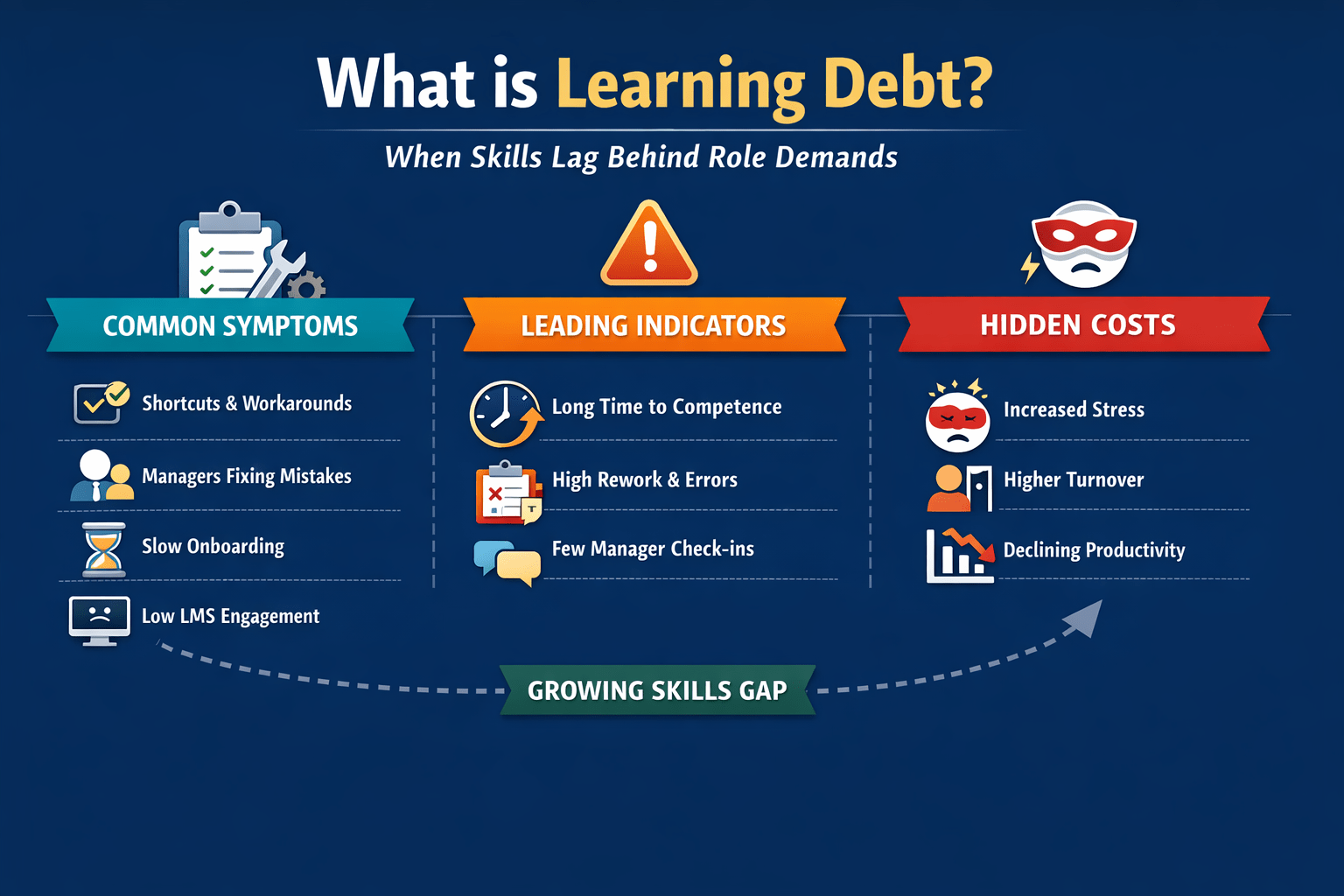
Learning debt describes the gap between what a role requires today and what employees have had time to learn. It grows when organisations prioritise output but delay development.
Common symptoms of learning debt
- Employees rely on shortcuts and workarounds
- Managers step in to fix repeat mistakes
- New hires take longer to reach confidence
- Learning platforms show low engagement despite high need
Leading indicators HR leaders should watch
- Longer time to competence for new roles
- Rising rework and error rates
- Fewer coaching conversations between managers and employees
The hidden costs of learning debt
Learning debt affects more than performance. It impacts wellbeing, retention, and trust in L&D. People feel behind, so stress rises. Managers feel unsupported, so coaching declines. Over time, productivity slows, not because people work less, but because they correct more.
The Workload Trap Behind Learning Debt
Many organisations invest in productivity tools and AI to increase throughput. That sounds positive, but it often creates a workload trap.
How the workload trap forms
- Tools increase the volume of tasks, not available capacity
- Meetings multiply to coordinate faster work
- Learning time shrinks because delivery feels urgent
As a result, learning in the flow of work becomes an aspiration rather than a reality. Without intentional design, tools accelerate work while learning debt grows in the background.
Five Interventions That Buy Back Learning Time
Reducing learning debt does not require more courses. It requires smarter work design.
1. Redesign roles, not just training
Clarify what outcomes matter most in each role. Remove low value tasks so people have space to learn what matters.
2. Fix meeting hygiene
Shorter meetings, fewer attendees, and clear decisions create time. That time can support reflection, practice, and peer learning.
3. Use job aids and performance support
Job aids reduce cognitive load. They help people perform correctly without stopping work, which supports learning in the flow of work.
4. Build microlearning into moments of need
A strong microlearning strategy focuses on relevance and timing. Short, targeted support beats long courses that people postpone.
5. Equip managers with learning routines
Managers drive learning time. Simple routines, like weekly coaching questions or post task reflections, reduce learning debt at the source.
Setting Minimum Viable Learning for Every Role
HR leaders can manage learning debt by defining minimum viable learning. This approach sets clear expectations for what must be true at key milestones.
30 days
- Understand core tools and processes
- Complete essential tasks with guidance
60 days
- Perform independently in common scenarios
- Use job aids confidently
90 days
- Handle exceptions and edge cases
- Coach peers or share improvements
This structure reduces overload and helps employees focus on what matters now, not everything at once.
A Simple Measurement Stack for Learning Debt
You cannot manage learning debt without measurement, but metrics must stay practical.
Core L&D metrics to track
- Time to competence, how quickly people perform independently
- Rework rate, how often work must be corrected
- Manager coaching frequency, how often learning conversations happen
Together, these metrics reveal whether learning in the flow of work actually works, or whether workload still blocks it.
Why This Matters Now
Workload and wellbeing concerns rise across industries, and HR leaders sit at the centre of the response. Learning debt explains why traditional training struggles to keep up. By redesigning work, supporting performance, and measuring what matters, organisations can reduce learning debt and restore time to learn.
Platforms like JLMS Cloud support this shift by enabling microlearning, performance support, and manager led learning without adding friction. When learning fits work, debt stops growing.
Sources:
Discover more from JZero Solutions
Subscribe to get the latest posts sent to your email.

No responses yet