

Not every learning initiative needs to feel like a boardroom presentation. Learning at Work Week ideas work best when they feel social, practical, and easy to join. When you add playful formats, more employees participate, because learning feels like something they want to do, not something they must complete.
Learning at Work Week 2026 (18th – 24th May) focuses on the theme “Many ways to learn.” That message matters. Employees learn through conversations, quick experiments, and shared experiences. So L&D teams that mix formats often see stronger engagement.
This guide shares simple activities you can run quickly, even with a small budget. You can adapt them for hybrid teams, and you can track meaningful outcomes.
Why Fun Workplace Learning Drives Participation
Traditional training sessions still matter, but they do not always create excitement. Employees often skip optional sessions because they feel long or formal.
Fun workplace learning formats change the dynamic because they:
- Lower the barrier to participation
- Encourage peer learning and collaboration
- Fit naturally into the working day
- Support different learning styles
Short, interactive sessions also support the many ways to learn theme. People learn through listening, teaching, experimenting, and observing others.
When L&D teams design learning moments that feel natural, participation rises.
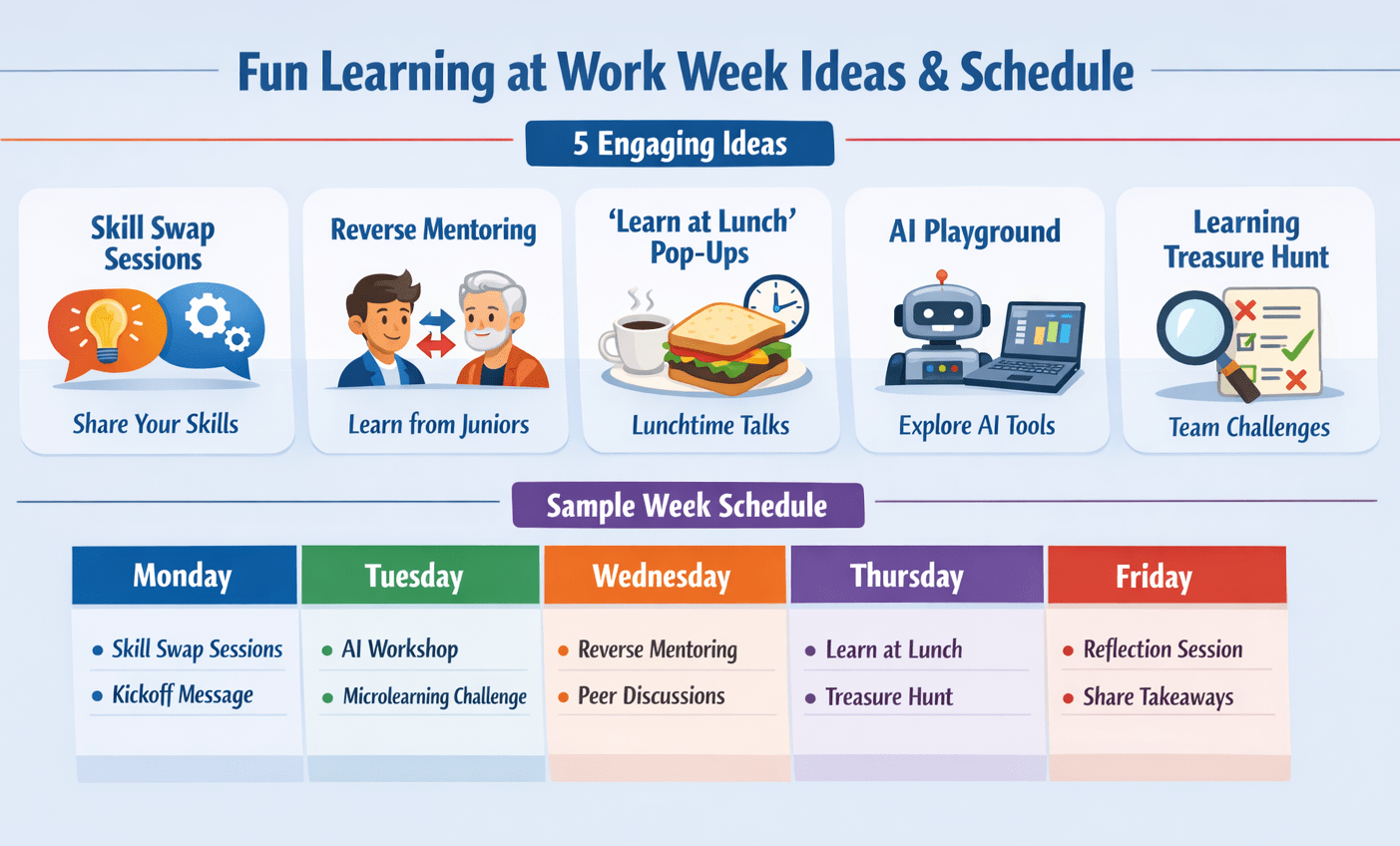
Five Learning at Work Week Ideas You Can Try
You do not need a large budget to run engaging employee learning activities. Simple formats often work best.
1. Skill Swap Sessions
Ask employees to volunteer a skill they can teach in 20 minutes.
Examples include:
- Excel shortcuts
- Public speaking tips
- Prompt writing for AI tools
- Time management tricks
Then run quick sessions throughout the week. These sessions build internal expertise and encourage knowledge sharing.
2. Reverse Mentoring
Reverse mentoring flips the traditional model.
Junior employees share knowledge with senior leaders, often around topics like:
- Emerging technology
- AI tools and productivity
- Digital collaboration habits
This format strengthens relationships and promotes a culture of curiosity.
3. “Learn at Lunch” Pop-Up Sessions
Short lunchtime talks can attract large audiences.
Keep sessions simple:
- 15 to 20 minutes
- One practical takeaway
- Open Q&A at the end
Topics might include career development, leadership skills, or personal productivity.
Because sessions stay short, employees feel comfortable joining without blocking large parts of their day.
4. AI Playground
Many organisations want to explore AI but employees feel unsure where to start.
Create an informal AI playground session where employees can:
- Test AI prompts
- Share tools they use
- Discuss ethical use of AI at work
These sessions often spark curiosity and practical experimentation.
5. Learning Treasure Hunt
A learning treasure hunt turns development into a team challenge.
You can create tasks such as:
- Watch a 5 minute microlearning video
- Ask a colleague about their role
- Try a new productivity tool
Participants collect points for each activity.
This format encourages exploration and teamwork.
Making Learning Inclusive for Hybrid Teams
Inclusive L&D engagement ideas help everyone participate, not only office based staff.
Consider these adjustments:
- Offer both live and recorded sessions
- Run some asynchronous learning challenges
- Use digital discussion boards for reflections
- Schedule sessions at varied times
Introverts often prefer written contributions, so discussion channels can help them share ideas comfortably.
A strong learning culture values many ways to contribute.
What to Measure Beyond Attendance
Attendance numbers look good, but they do not tell the full story.
Instead, track signals that show genuine engagement.
Examples include:
- Number of peer learning sessions created
- Employee feedback scores
- Knowledge sharing activity after the event
- New mentoring relationships started
- Content engagement in your LMS
A platform like JLMS Cloud helps L&D teams capture these signals. You can host bite size learning, track engagement, and measure participation across the organisation.
When learning data becomes visible, leaders see the real impact of workplace learning initiatives.
A Simple Learning at Work Week Schedule
If you want a quick starting point, try a simple structure like this.
Monday
- Launch message from leadership
- Skill swap sessions
Tuesday
- AI playground workshop
- Microlearning challenge
Wednesday
- Reverse mentoring conversations
- Peer discussion groups
Thursday
- Learn at Lunch pop-up sessions
- Learning treasure hunt activities
Friday
- Reflection session
- Share key takeaways across teams
This structure mixes social learning, experimentation, and reflection.
There Are Many Ways to Learn
Learning at Work Week reminds organisations that development does not only happen in classrooms.
People learn through conversation, curiosity, experimentation, and collaboration. When L&D teams embrace these formats, participation grows and learning becomes part of everyday work.
So borrow these Learning at Work Week ideas, adapt them for your culture, and create experiences your employees actually want to join.
And when the week ends, use your LMS to keep the momentum going.
Sources:
https://www.learningatworkweek.com/
https://www.learningatworkweek.com/LAWW/LAWW/Build-Your-Week/Plan/2026_Theme_Many_ways_to_learn.aspx https://www.learningatworkweek.com/LAWW/laww/build-your-week/Plan/Plan.aspx
https://www.learningatworkweek.com/LAWW/LAWW/Build-Your-Week/Plan/LAWWeekUltimateGuide.aspx
Discover more from JZero Solutions
Subscribe to get the latest posts sent to your email.

No responses yet